






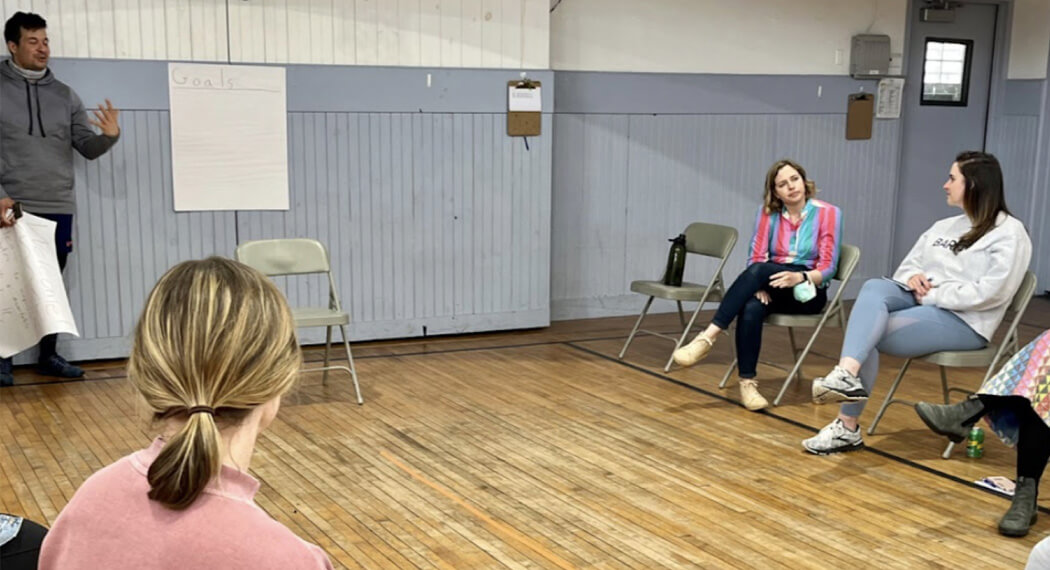


At our faculty meeting today, the teachers were given the chance to play. A science provocation was offered – Exploring the Invisible Force of Wind.
We anchored the experience with the questions: “How do we know the wind is there if we can’t see it?” and “How does the wind move?”
For early childhood educators, playing while planning science curriculum is crucial because it helps them understand play as a powerful, scientific process. By engaging in playful inquiry, educators experience firsthand how open-ended materials, experimentation, and “messy” testing build curiosity, problem-solving skills, and an understanding of core scientific concepts such as cause and effect.
Why Playing in Science Planning is Essential for Educators:
Understanding the Child’s Perspective: Playing allows educators to experience the wonder, frustrations, and cognitive breakthroughs that children face, helping them anticipate learners’ needs.
Designing Authentic Science Experiences: Educators learn to transform simple materials (like paper tubes, ribbons, or dowels) into complex science investigations, moving from simple play to purposeful, scientific “discovery”.
Modeling Scientific Thinking: When teachers play, they practice building hypotheses, testing ideas, and analyzing results, empowering them to teach the scientific method through guided play rather than just delivering content.
Encouraging “Risk-Free” Exploration: Teachers learn to create a safe space where mistakes are seen as data, encouraging children to persevere through challenges and develop curiosity.
Fostering Scientific Vocabulary: Playing helps teachers identify opportunities to introduce scientific terminology in context (e.g., observe, predict, force, analyze) that children can easily grasp.
In essence, educators who “play” with scientific concepts can better curate a curriculum in which children act as active, motivated investigators rather than passive recipients of information.