


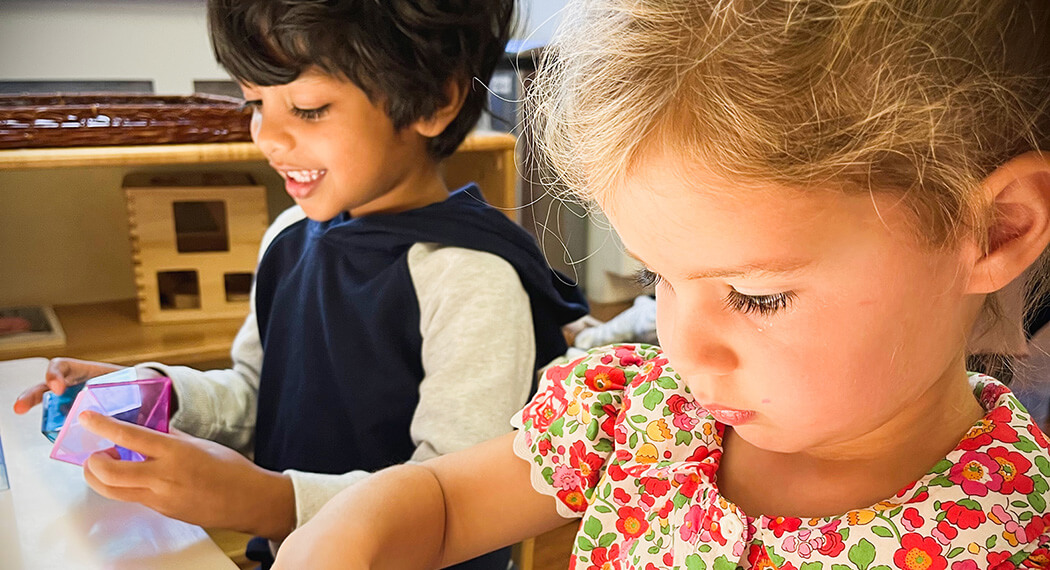
We’ve noticed an increased interest in puzzle work these last few weeks, with many children spending time exploring different kinds of puzzles. We’ve worked on puzzles since the beginning of the year, and it’s been so exciting to see the children challenging themselves to try different kinds and work as a team to fit tricky pieces together.
Puzzles support many areas of development, including:
– Practicing fine motor skills and hand-eye coordination
– Persisting through frustration
– Developing focus, logic, and reasoning
– Building confidence through practice
Most importantly, puzzles are fun and stimulating, especially when children connect with the puzzle they’re working on. We all love animals in the Silver Room, and have been focusing recently on lots of different animal puzzles. This topic has led to many interesting conversations about animals – which ones we love, questions we have, new animal vocabulary, and where different animals live.
Lions and Tigers and Bears, Oh my! These colorful puzzles do not have a base, and the shapes of the pieces follow the shape of the animals, encouraging children to think about how each animal looks.
The puzzles below feature animals as well, and have a base and uniformly sized pieces. While the base acts as a foundation with a picture, the nine pieces are tricky to sort, especially since some of them fit together in multiple ways.
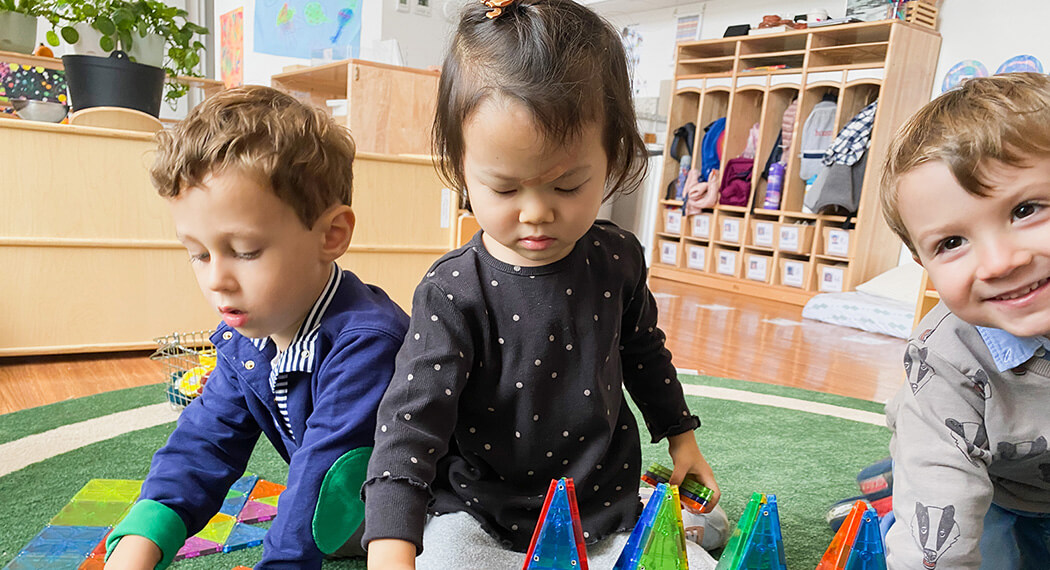
We also have many wooden puzzles, featuring animals, numbers, letters, and a “hide and seek” puzzle where we place items in their homes. Our large Plus Plus blocks are their own kind of puzzle – fitting together in different ways.
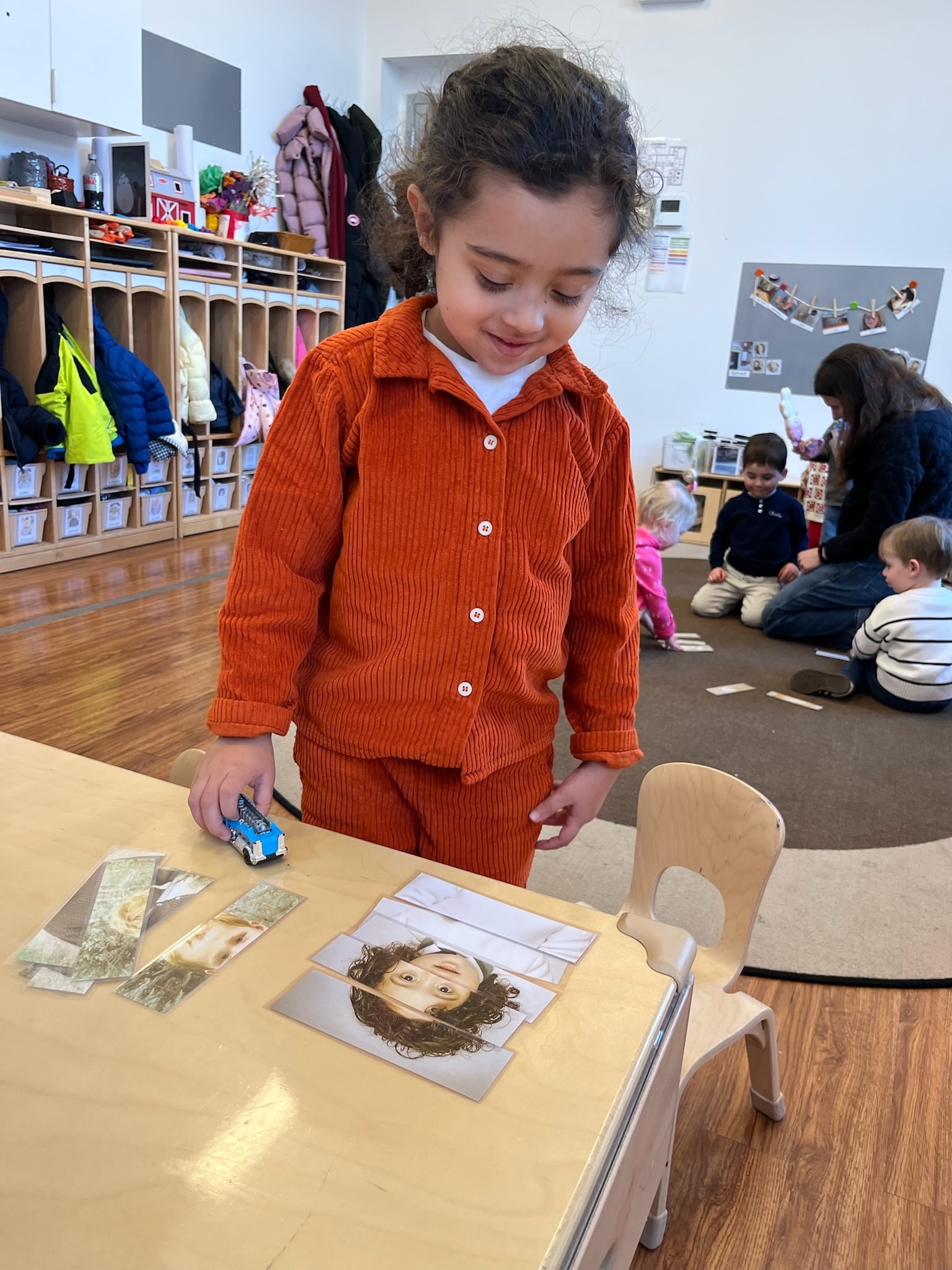
After noticing the children’s puzzle enthusiasm, we decided to use photographs to make puzzles of their faces. We laminated large photos and cut them into strips, inviting the children to find their faces and arrange them so we could see who was who!
They were so excited to recognize themselves and their peers, and worked hard to figure out how to arrange the pieces. They even combined some pieces to make new faces!
We can’t wait to continue building on this interest and involve the children in making their own puzzles using drawings or photographs!