



Thank you for joining us Thursday evening for our Back to School Night event. We are having a wonderful time getting to know your children and watching the unique ‘personality’ of each class develop. We are excited for the year ahead!
Below, you’ll find our presentation and some teacher notes for you to review. As always, if you have any questions, feel free to reach out.
When we were deciding how to structure this presentation, we thought about what would be top of mind for you as parents. Knowing that children often share that they “did nothing” at school, we decided to give you a sneak peek into a day in the life of a Purple Room student – in which your children do so much! It’s important to note that this is not an exhaustive list -for the sake of time, we had to set aside times of day like read-alouds, bathrooming, and transitions.
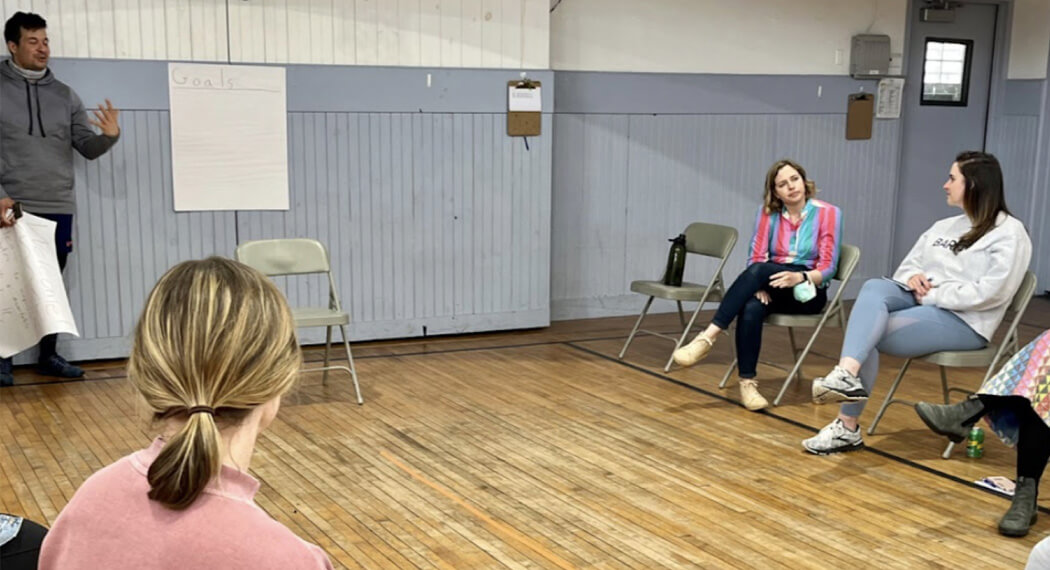
Our three main goals for the year are above. These goals overlap – for example, when two children are building together, they are working to independently generate ideas, communicating about plans, and connecting over shared interests. These goals are also multi-faceted. When thinking about independence, for example, we think not only of independence in self-care routines (like using the bathroom or cleaning up after snack), but also of independence in problem-solving. We will return to these goals throughout the year as we plan activities and build our curriculum.
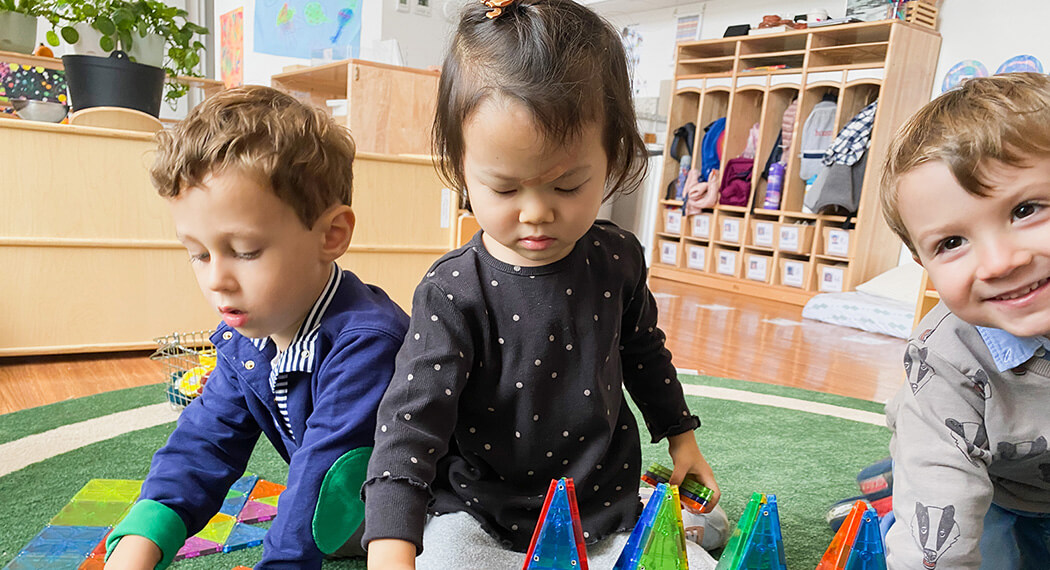
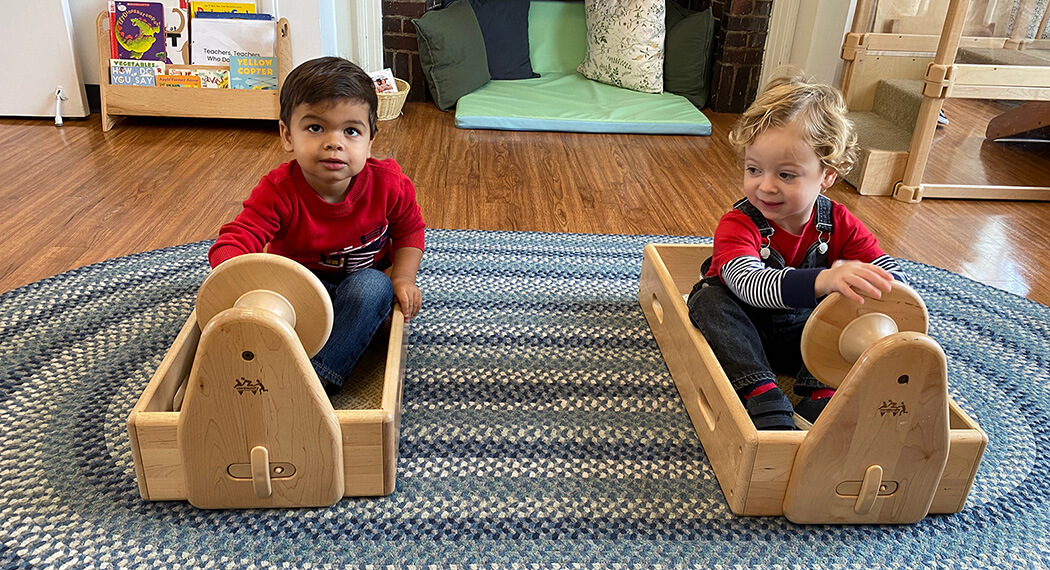
During Open Time, children can make choices about what they want to work with and how they want to play. There are a variety of materials available during Open Time, including building, reading, art, imaginative play, and sensory play. Free play time encourages self-discovery and decision-making skills. Children begin to notice one another, making connections over shared interests and collaborating on work together.
During this time, children move through the stages of play development: onlooker play (children observe one another), parallel play (playing side-by-side with similar materials), associative play (engaging others through borrowing materials or taking turns; goals may differ), and cooperative play (children work towards a shared goal and follow simple rules).
Hello Meeting is a time when the class intentionally comes together as a community. We sing hello. We take attendance, thinking about our friends who may be at home. This is also a time for discussion. During meeting, we reflect on what ideas came up in play, share stories from home, and/or introduce new materials. After Marvelous Materials, for example, teachers may lead children through a discussion about what they discovered while working with Jahidah. During discussions, children practice listening to each other and building on previous statements.
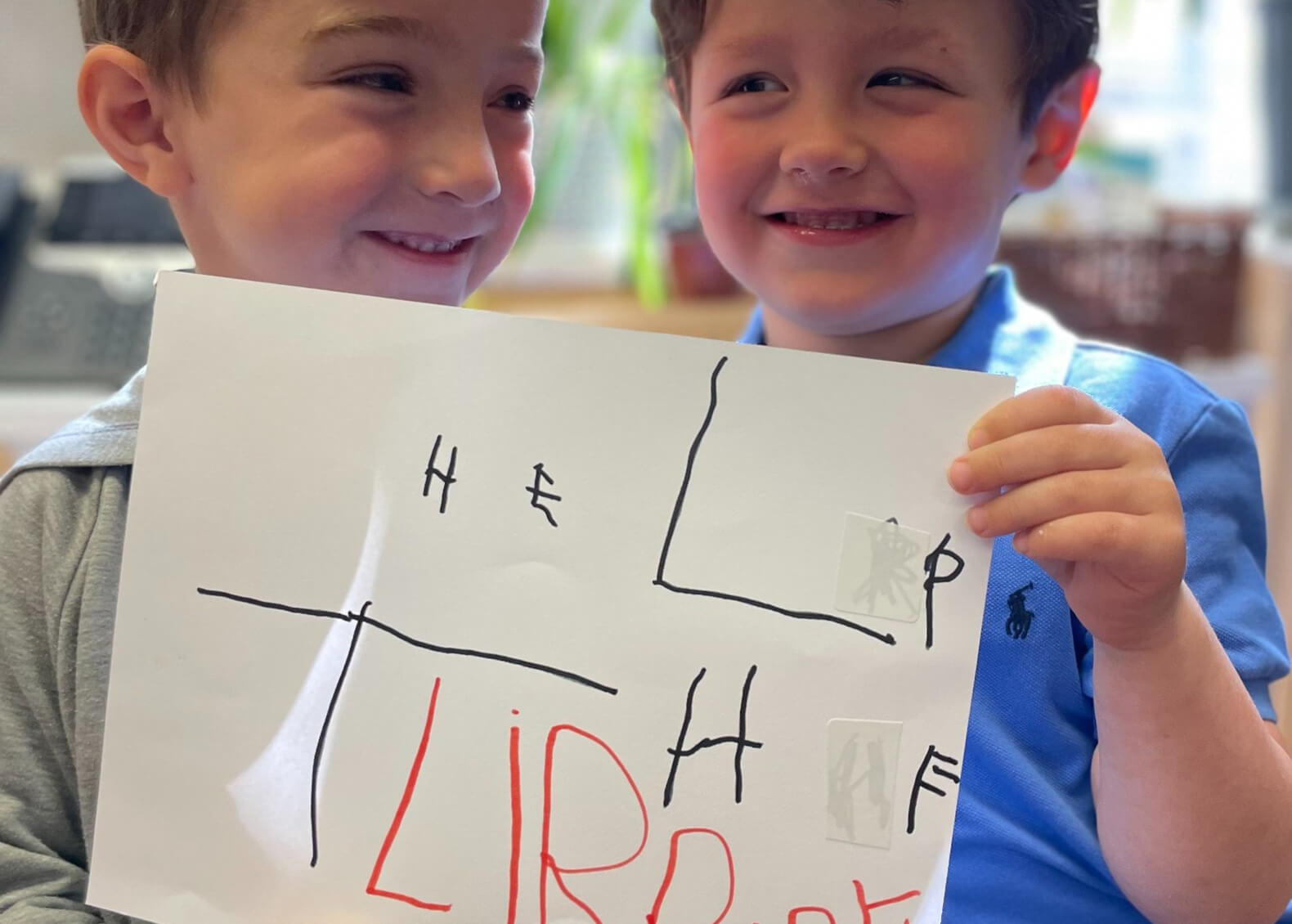
This is also a time for academic skills to emerge. When we read the schedule, for example, we practice reading from left to right, mirroring how children will eventually read print. Children have begun noticing the labels underneath our schedule cards, asking, “What does that say?” As mentioned in our recent Rock Storypark, attendance will become a time to practice counting and comparing quantities.
Snack is another time when community is at the forefront. Pretty early on in the year, we began having family style snack, in which children serve themselves from a tray in the middle of the table. This is a time to practice fine motor skills, as children use utensils (such as a spoon) or their pinching fingers to pick up pieces of fruit or crackers. Children work on taking only what they need from the tray, leaving enough for their friends. They’re practicing listening to their body’s cues of when they’re still hungry and when they feel full. Some children have expressed an interest in pouring their own water using our metal pitcher. We will build up to having everyone pour their own water by the end of the year.
At the end of snack, children are responsible for cleaning up their plate and cup. They place their plate carefully in the white bin. They place their cup on the green tray, which is always available for when children are thirsty throughout the day.
We have three main gross motor spaces: the track, the gym, and the roof. We will also take walking trips later this year to local playgrounds, once we have built up our safety skills. In gross motor spaces, children are building their confidence and leadership skills. We support children in taking risks, knowing that “risk” is relative for each child. For some children, climbing up the rock wall in the gym is a risk. For others, it’s jumping off a vaulted mat, climbing up the slide, or being the driver of the double-bike on the track. Teachers scaffold these moments of risk-taking to ensure that children are safe and gain confidence in their abilities. After a new activity, we might ask, “How did that feel? Did that feel safe? Do you want to try it another way instead?” We aim to build independence, as children learn more about their physical limits.
Visits to gross motor spaces are also an excellent time to work on collaboration and cooperation. At this age, it can be easier for children to connect with one another through physical play, like hide-and-seek or chase games, which require less conversation and negotiation. We often see new connections emerging in these spaces, which carry back down into the classroom.
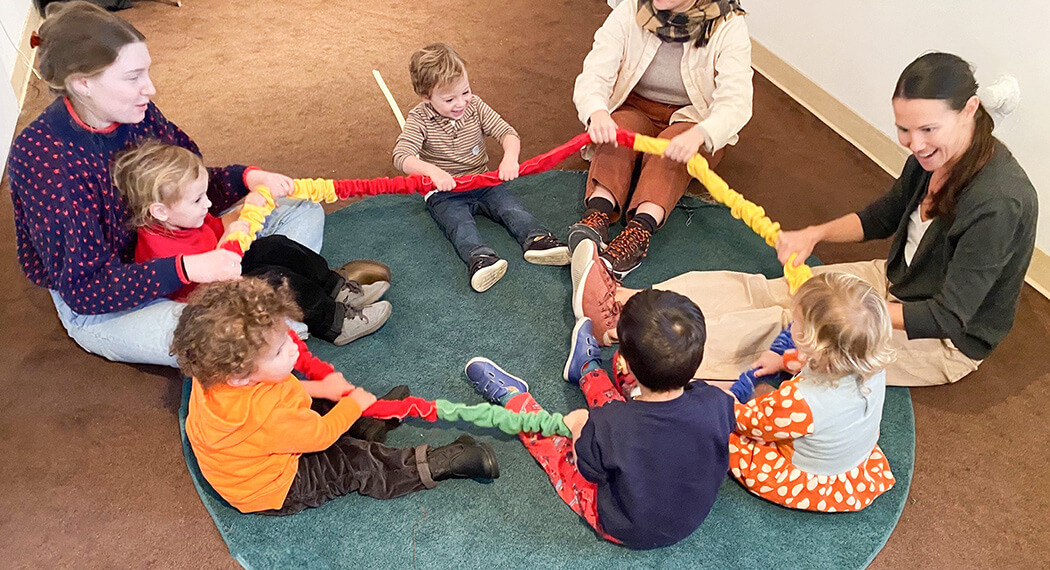
Specials are opportunities for more structured play. While specialist teachers make space for free choice and independence, these are also times to practice following “teacher choices.” For example, during Movement, Kyleigh will ask all of the children to participate in the activities together. Specials are also a time when children follow multi-step directions. During Pottery, Dave may ask us to “pat and flip” before using a cookie cutter to cut out a shape in the clay. Some specials happen in full groups, like Pottery and Music. Others occur in small groups, like Marvelous Materials and Movement.
Math and literacy are interwoven throughout our day, and emerge both from children’s play and classroom routines. As mentioned above, meeting is a time when we intentionally practice literacy and math skills by reading the schedule and taking attendance. As we transition to line up, we often sing a song called “Willaby Wallaby,” which practices rhyming skills and sound segmentation. During open time, we hear children thinking about “how many:” they count how many of each pattern block they have, how many floors we’ve walked up to get to the gym, and how many ghosts live in a book’s haunted house. They practice geometry through their work with pattern blocks, creating and decomposing shapes. They notice their names (and their friends’ names) on their rocks and cubbies, finding letters in common.