



Happy New Year! It’s been such a joy being back together in the Purple Room this week. In our group post this week, we are shining a spotlight on a math topic that’s near and dear to our hearts – counting.
Often, the first counting skill that children learn is reciting the number sequence in order: “One, two, three, four, five!” This sequence grows over time – children count up to 5, then to 10, then into the teens, etc.
Children learn the number sequence through memorization and repetition, similar to singing the ABCs. This means that they may be able to verbally count to ten, but not be able to count ten objects in front of them.
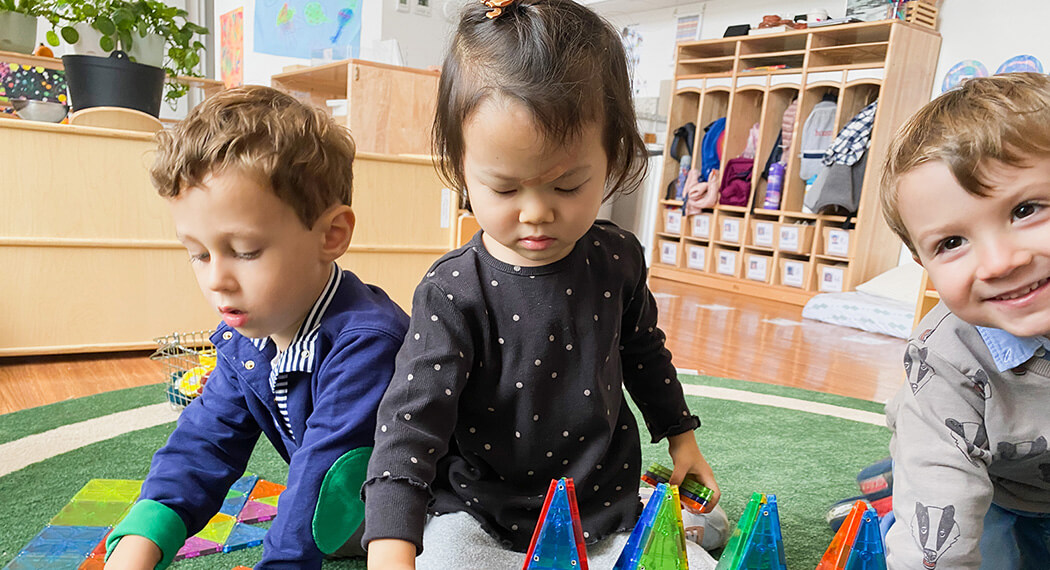
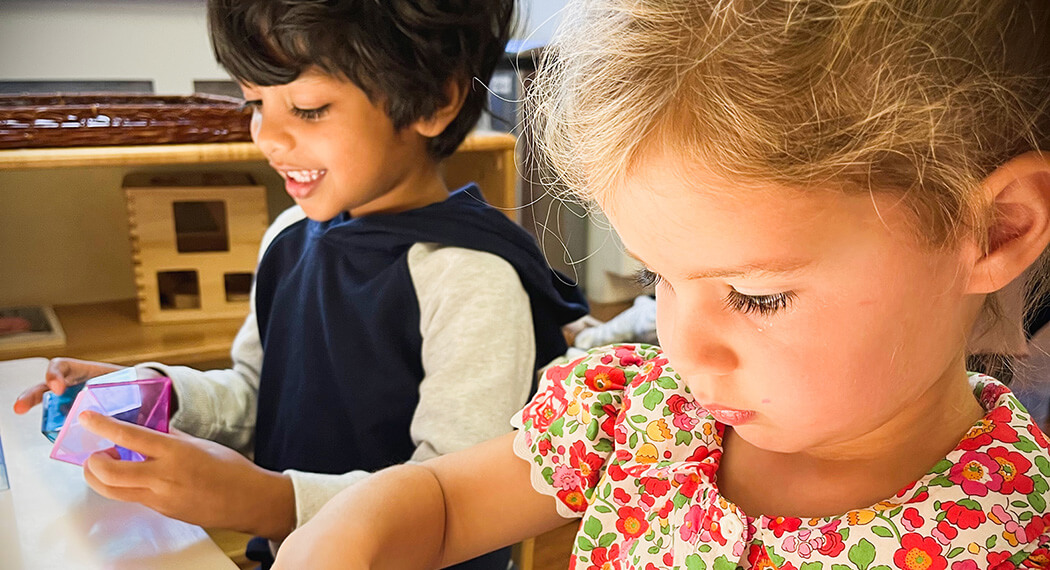
In order to be able to count objects, children need to build a connection between numerals and quantity. For example, children learn that the word “one” is equivalent to a single cup, or crayon, or Magnatile. In the Purple Room, we also talk about the number zero, which we say is “the name of the number that means no more.”
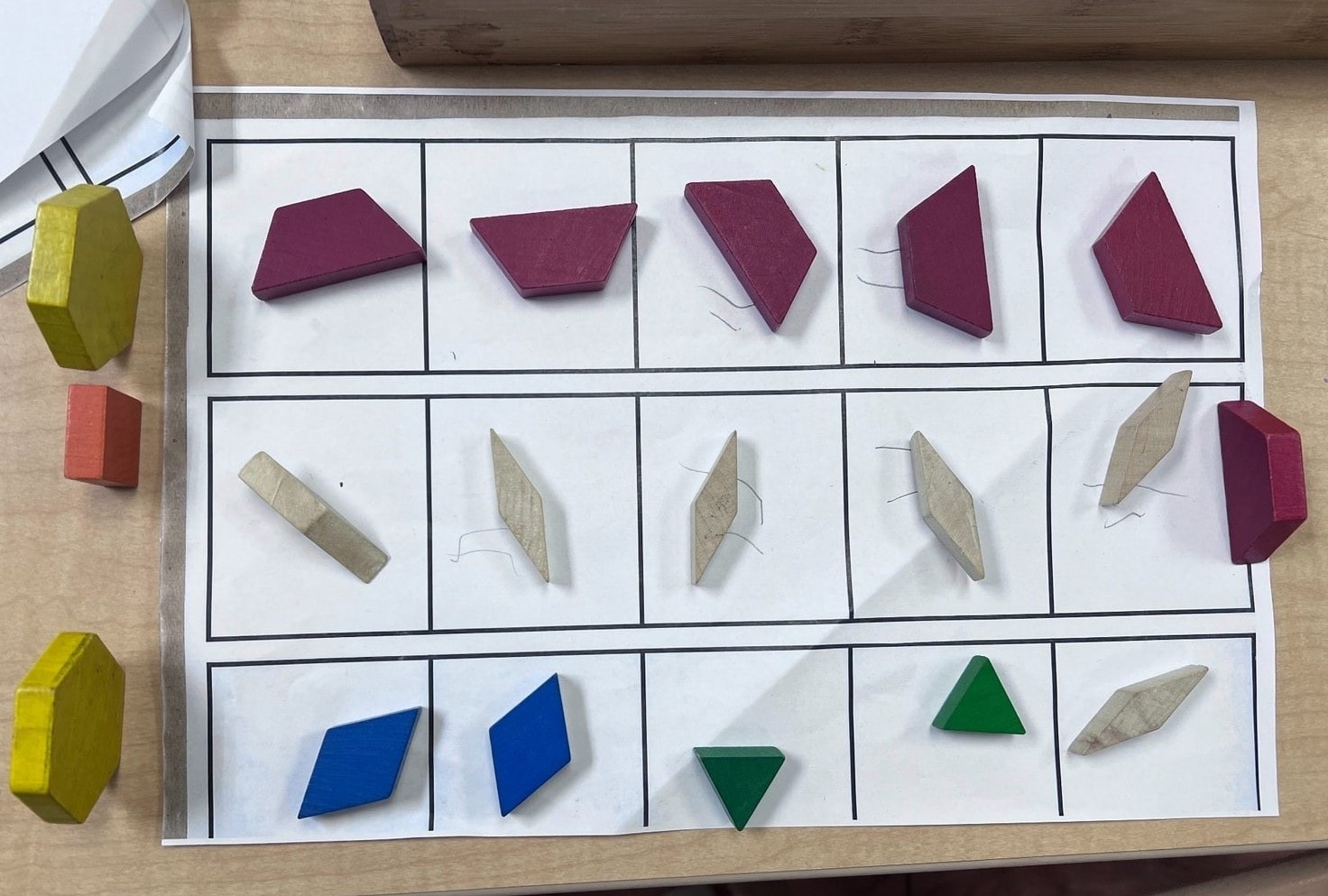
As children build this connection, they start to practice a skill called one-to-one correspondence. Counting with one-to-one correspondence means that you assign one (and only one) number to each object. Some of the ways that children practice one-to-one correspondence in play include:
– Setting a table (one plate at each chair)
– Filling a muffin tin with playdough
– Setting up one chair for each passenger on a “train”
– Arranging loose parts in a ten frame
– Building symmetrically
As children are first learning to count, it’s common for them to skip numbers. They may also count an object twice – for example, pointing to a block and saying, “one, two,” then pointing to the next block and saying, “three.” An organizational tool, like a ten frame, can help children keep track of which objects have already been counted.
This month, we’ll share a snapshot of your child’s counting practice in the Purple Room, along with some tips on how you can support their math learning at home!