



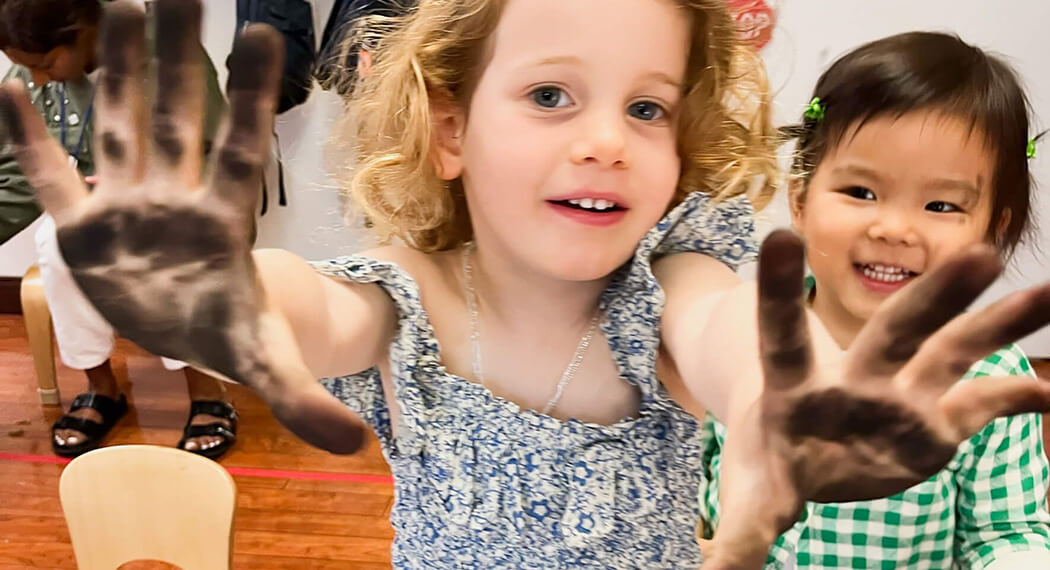

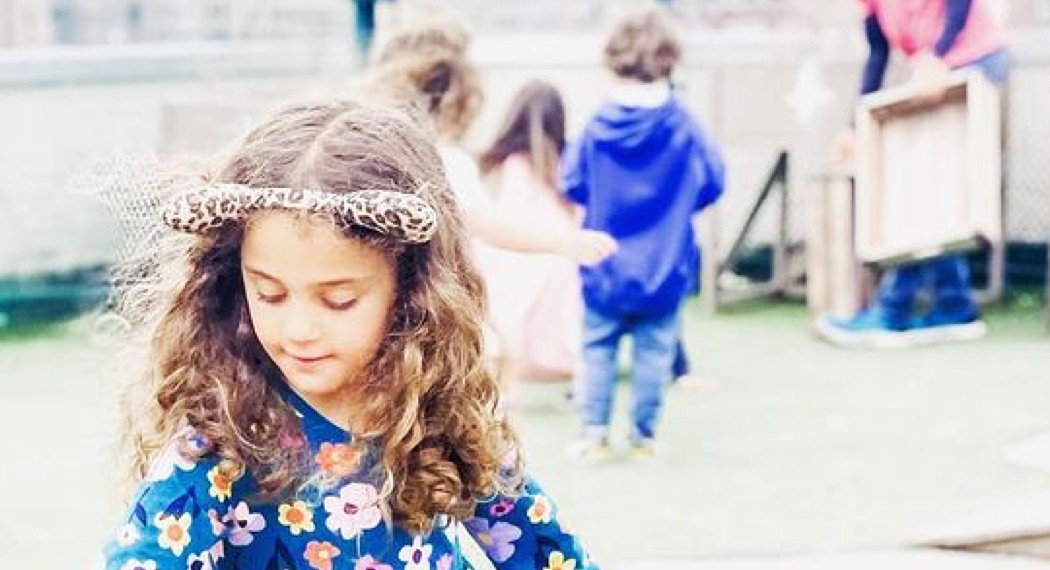
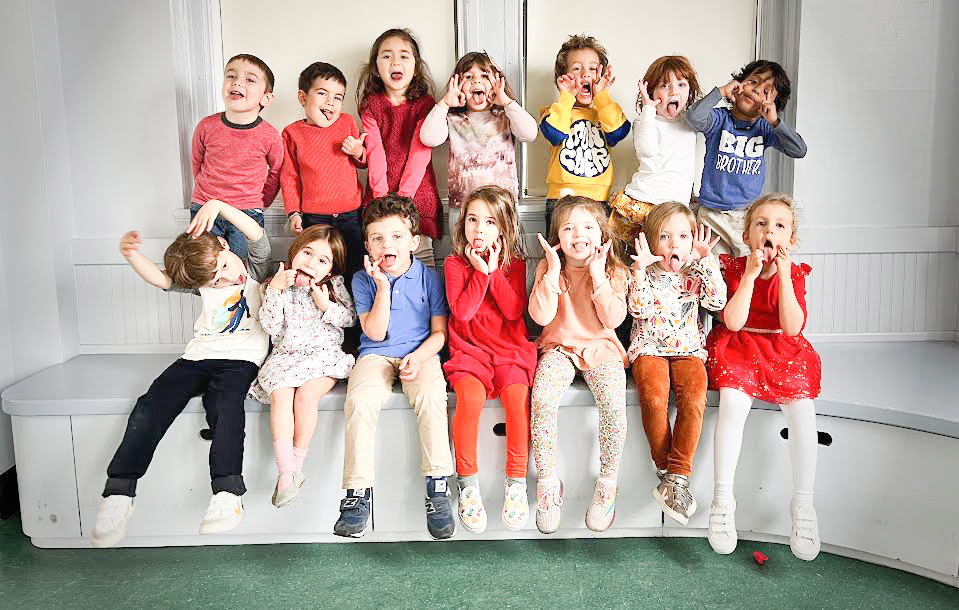




This week, for science and movement, the Two Trains visited St. Lukes in the Field Garden. After a leisurely walk and a relaxing stretch to warm up their bodies and their brains, they got to work using their senses to observe the garden.
Why Every Preschooler Needs a Garden Day
Think back to your favorite childhood memory. Chances are, it involves being outside. For a four- or five-year-old, a garden isn’t just a patch of dirt – it’s a living, breathing laboratory.
For our youngest learners, walking outdoors and visiting gardens serves as “nature’s gymnasium,” naturally boosting physical fitness by strengthening growing muscles, improving balance on uneven terrain, and increasing cardiovascular endurance through active play. Beyond the physical, these green spaces act as a powerful mental health sanctuary; the sensory-rich environment of a garden has been shown to significantly lower stress hormones like cortisol, helping preschoolers feel more relaxed, focused, and emotionally regulated.
When we take our youngest learners into nature, we aren’t just giving them fresh air; we are jump-starting their scientific minds. Here is why the garden is the ultimate classroom for the “Pre-K” crew.
Science You Can Touch
At this age, science shouldn’t be a lecture; it should be a sensory experience. In a garden, children aren’t just told that plants need water—they see the soil darken and the leaves perk up. They feel the rough bark of a tree and smell the sharpness of mint. This hands-on exploration builds the foundation for how they understand the physical world.
Understanding the “Big Picture”
Gardens are the perfect place to witness life cycles in real-time. Watching a bulb transform into a tulip with feathery petals provides a concrete lesson in biology that no textbook can match. It teaches kids about cause and effect, patience, and the responsibility of caring for a living thing.
The Power of Observational Drawing
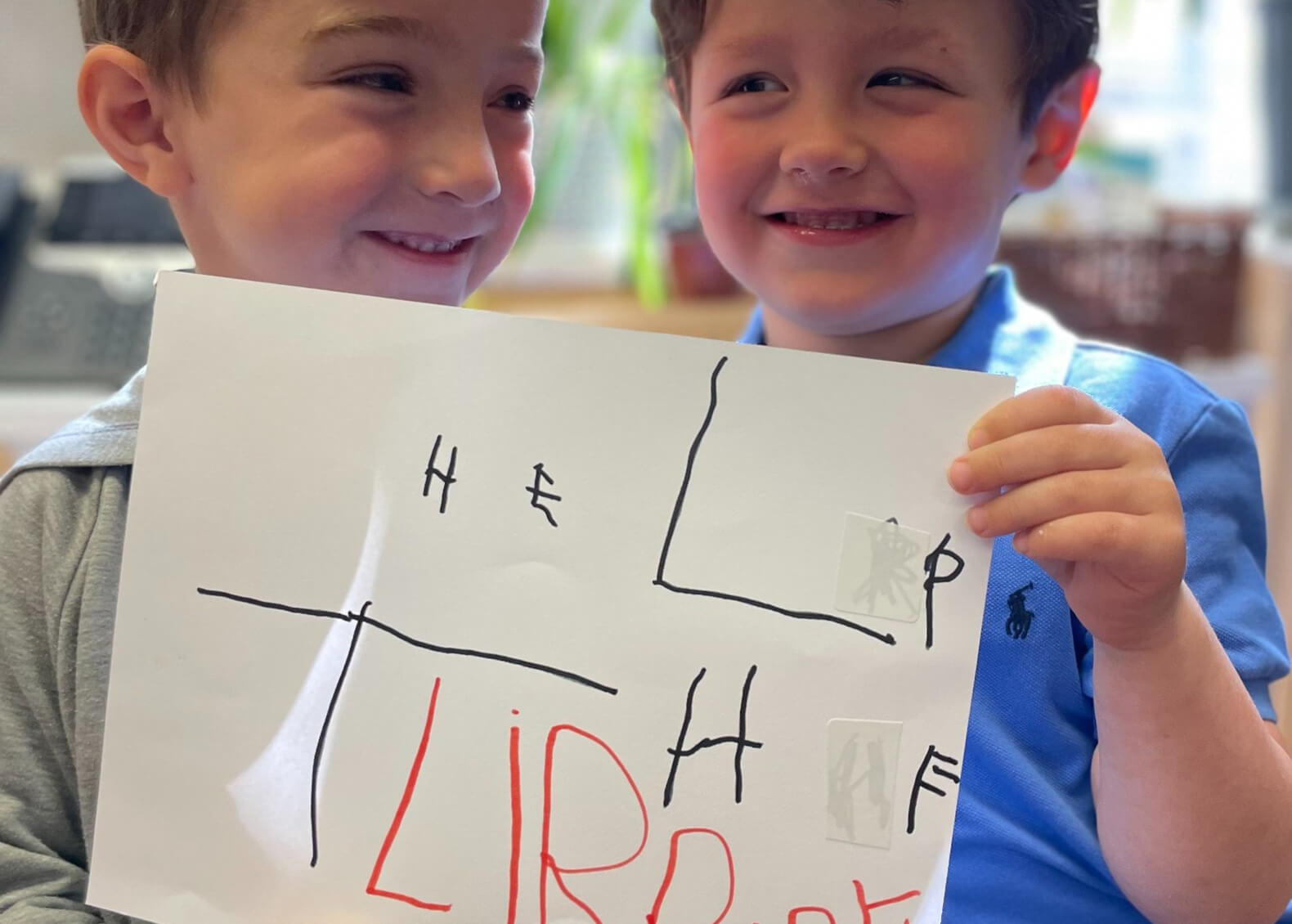
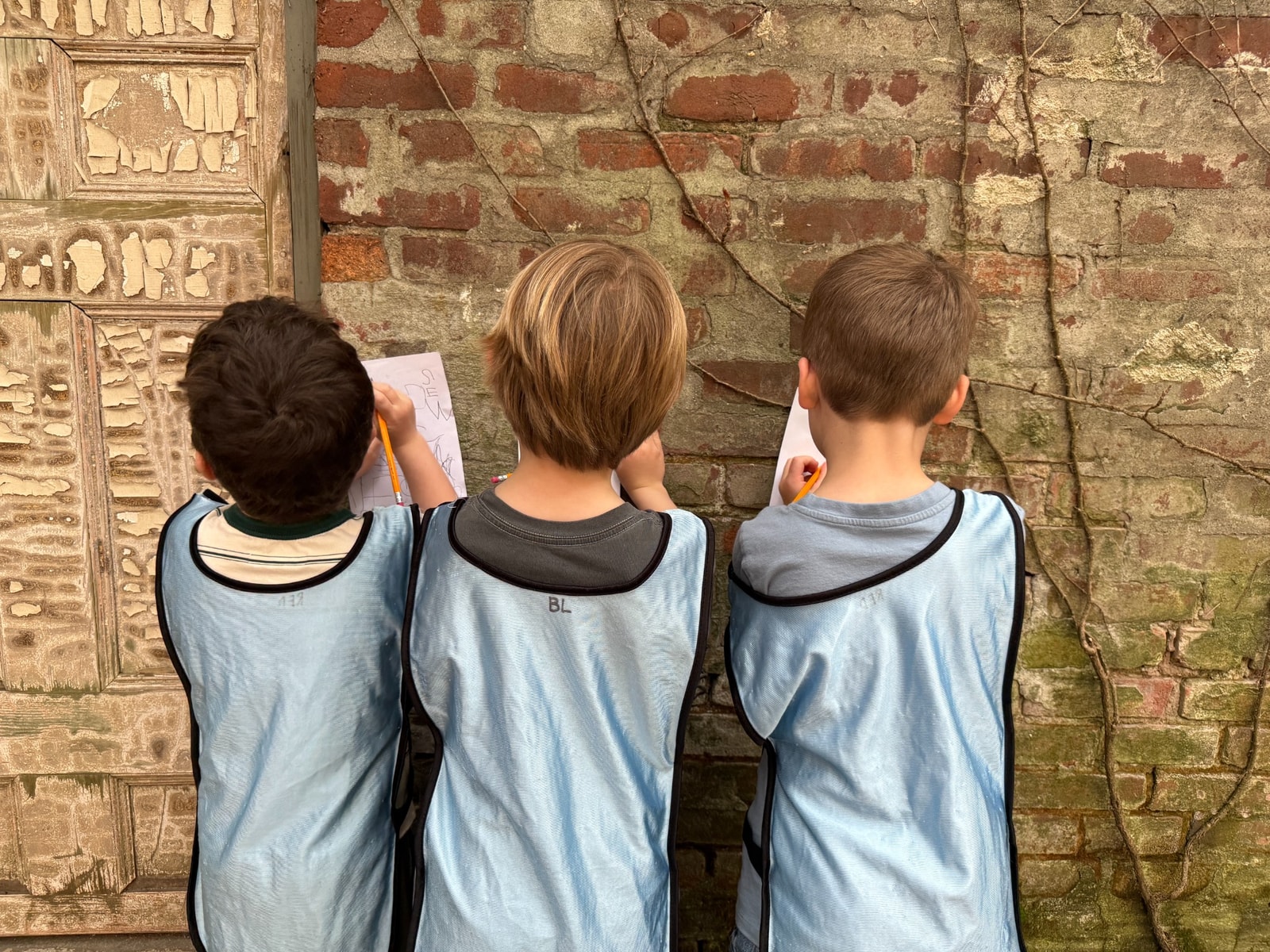
One of the best ways to deepen this connection is through observational drawing. When we give a 4- and 5-year-old a clipboard and a pencil and ask them to draw a leaf, something magical happens.
They stop looking and start seeing. They notice the veins in the leaf, the jagged edges, or the tiny bug crawling across the surface. This practice:
Slows them down: It encourages focus and patience.
Builds fine motor skills: Holding that pencil while looking at a 3D object is a great brain-body exercise.
Encourages inquiry: “Why does this leaf have holes?” or “Why is this one yellow?” “What shape is this branch?” “Why does this branch have a smooth curve and this branch have a sharp bend?” “Why are some petals round and some petals pointy?”
Growing Future Stewards
By getting children out into the world, we help them fall in love with it. When a child learns to respect a wiggly earthworm or marvels at a blooming flower, they develop a sense of stewardship. They realize they aren’t just in the world; they are a vital part of it.
Next time you’re heading outside, grab a magnifying glass and a sketchbook. You aren’t just going for a walk – you’re raising a scientist.