





Please enjoy the first part of our ongoing clay documentation. This will be printed and displayed in the art area of the room. Feel free to take a peek on Monday morning.
CLAY WORK
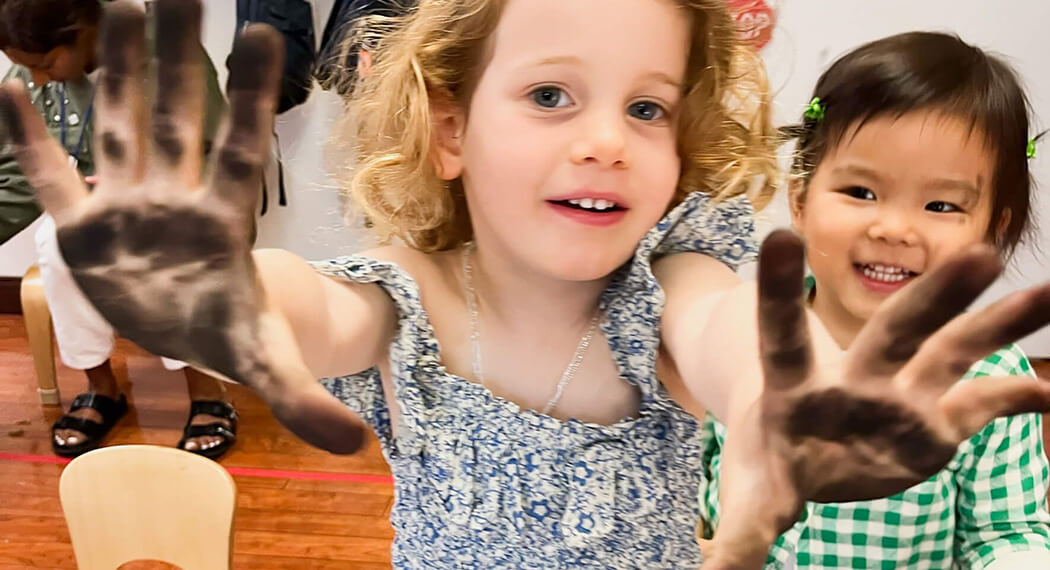
Clay is truly a magical material – it is one of the hundred languages children use to express themselves, its changing nature provides cognitive stimulation, and it’s just really fun to play with!
One of the major benefits for the 3s/4s age group is the work out of the fine motor muscles get when working with clay. Clay invites pinching, rolling, squishing, poking, and squeezing with the hands. With the addition of tools, children also work on dexterity and hand-eye coordination. This targets the muscles they need to write, draw, and complete self care tasks like buttoning, zipping, and opening/closing containers.
Our clay exploration, which will go on all school year, has started with simple tools, such as skewers and straws, ribs, and ribbon and modeling tools…
The clay table has become a place where the children can work together and share ideas and skills.
“I used the stick to go around and around.”
“I’m making some snakes.”
“This is how I decorate it.”
“I went like this and this and this and this!”
One child gets ready to flip her slab of clay, remembering Pottery Dave’s mantra of “pat pat flip” so the clay doesn’t stick to the board.
Another used the wood skewer to pierce the clay repeatedly and ran his hands over the texture he created.
A few children used one hand to hold their clay steady while smoothing it with a rib with the other.
“Look, look! I made it smooth!”
“I cutted here and here with the stick. Do you see?”
“Are you cutting? I can help. You need something sharper. I can hold it steady.”
Carly, our materials specialist, brought in pieces from the Greenwich House pottery school and we used them as inspiration. One child used the ribbon tool to replicate a cup he liked while another made her own small plate based on the example.