


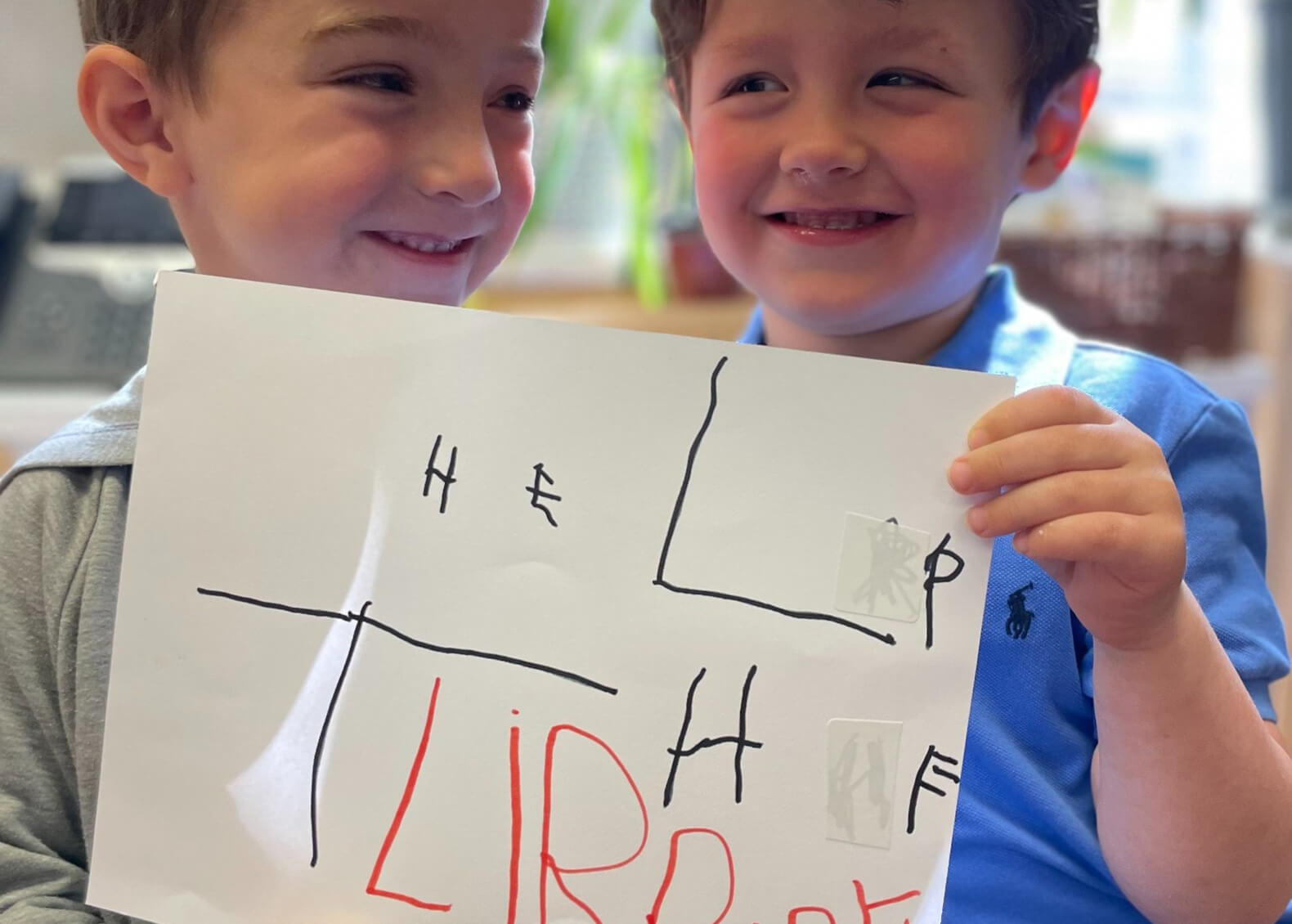
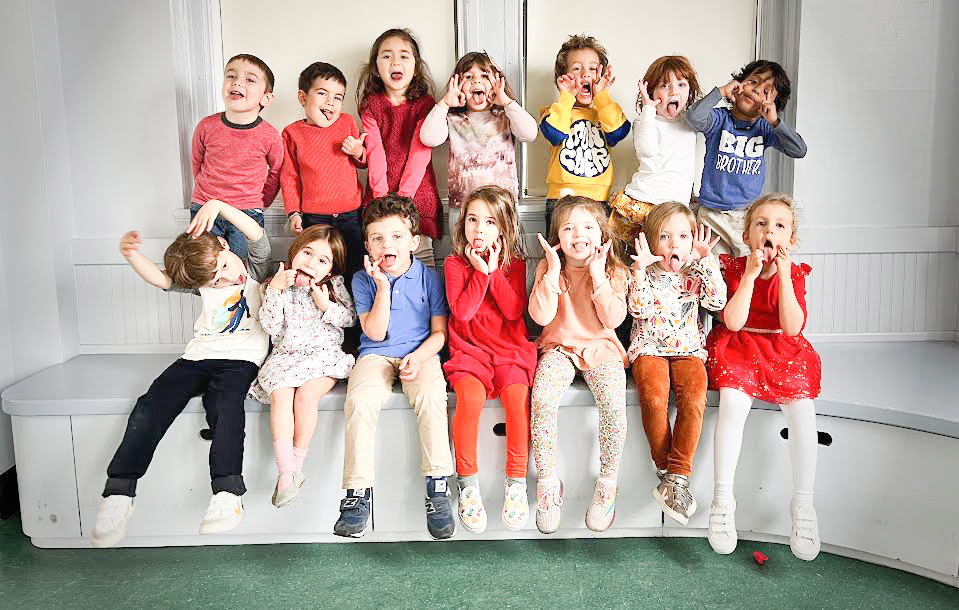
As I began brainstorming ideas for our final project this year for the Flexible Foxes, I looked at what the children were working on and listened for the connections they were making. I noticed just how connected this class was to storytelling – whether it was time spent at the writing table, listening to their family’s name story, or sharing homemade books with their classmates – I could tell these kids LOVED a good story.
In my intention to honor the “100 languages of children” I knew I wanted a project that would provide inspiration and excitement for all of our Blue Room learners. Through discussions with team members and reflection on the class’s strengths and interests, the “one story, many ways” idea came to be!
We launched this final Blue Room study this year by posing a question to the Flexible Foxes: “What does a story need?”
As we reflected on the stories we knew and loved, we came up with four major elements: Characters, Setting, Problem, and Title.
Now that we knew so much about stories, it was time for us to write our own!
We returned to our four main elements and engaged in a series of brainstorming and voting to decide on what our story would be about…
To choose our characters, I placed all of our beloved classroom stuffies in a bag and invited three friends to close their eyes, reach in, and pull one out – mystery style! When some children were feeling disappointed that their favorite stuffies did not get chosen, we learned about the idea of main characters. The three that did get chosen would be our main characters, the ones who the story focused on, however, that did not mean the rest of the stuffies would have to be left out of the story!
So we ended up with Heron Heron Love Love, Jumperoo, and Serena as our main characters.
At another meeting, we brainstormed a variety of settings we might want to tell a story about. In the end of that conversation, we narrowed it down to the beach, a magical forest, and a superhero city.
The following meeting was held to decide on what our story’s big problem (or conflict) would be. Different settings lent themselves to different problems, so we came up with a range of problems for each of our top three settings.
The beach setting seemed to inspire the most problems. Here were the contenders:
1) Serena’s baby whale gets lost
2) there is a giant sand monster on the beach
3) there is a bad octopus who keeps dragging people out to sea
4) a shark eats one of the characters
5) a boy turns himself into a fish and swims away from his parents
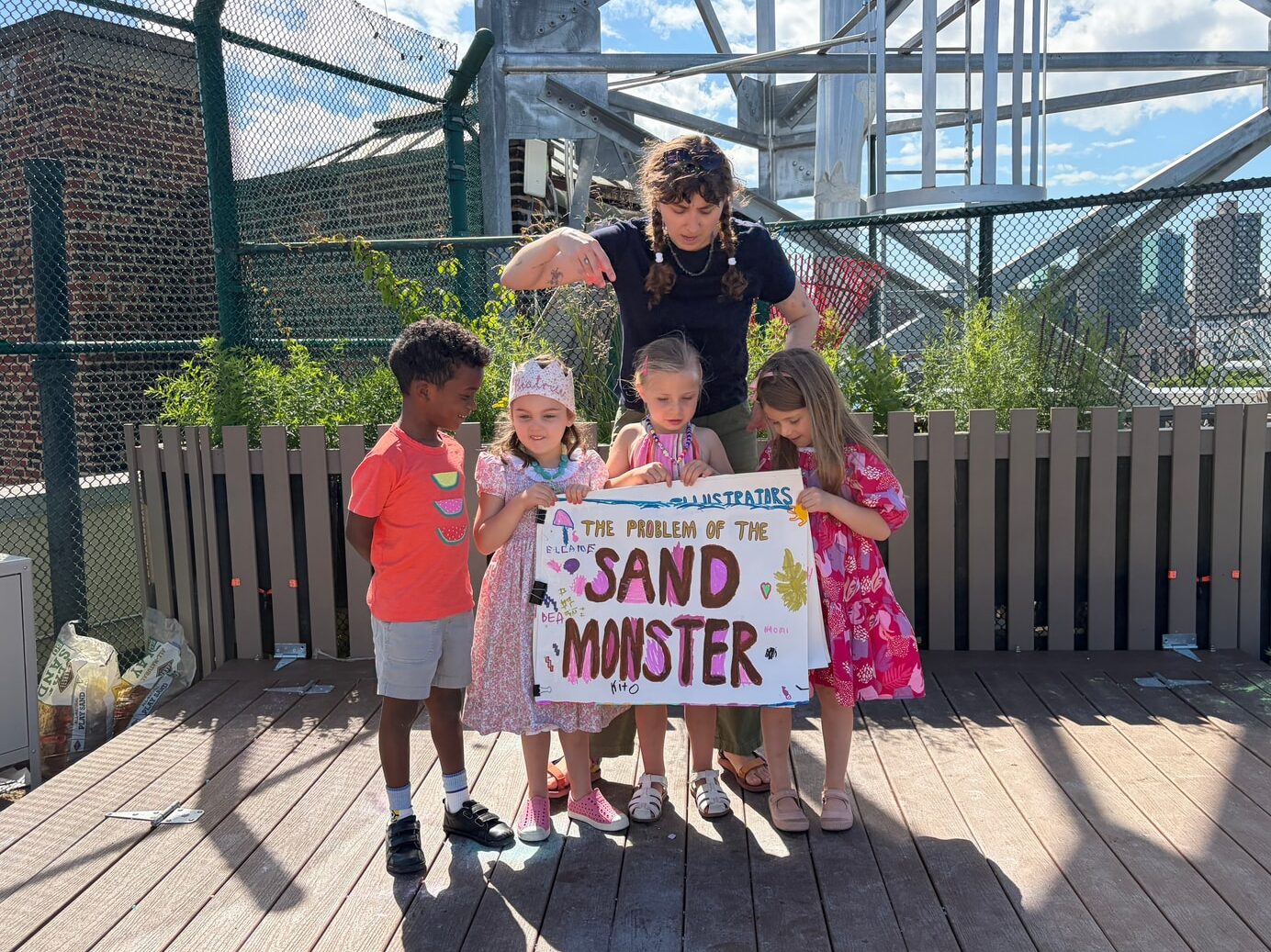
With problem #2 receiving the highest number of votes, “The Problem of the Sand Monster” was born.
The writing happened all in the whole group, with children raising hands to dictate ideas or sentences to add to the story. Altogether, the actual writing process took about 4 sessions across as many days. The Flexible Foxes lived up to their names as they showed flexibility as ideas they didn’t all always agree with were included into the group story. We worked hard to follow our classroom mantra: “Everyone’s ideas are important.”
Finally the day came when we had finished the story and the Flexible Foxes got to choose how they would tell the story for our Curriculum Share. The class was given three choices, each with five spots: Puppets with Marlene, Big Book with Simone, and Performance with Brenna.
Teachers picked sticks and as each child’s name was called, they declared which group they would like to be in. And so, I gained the great honor of working on our Big Book with five classmates.
Session 1: we make a story board and map out who is illustrating which pages. We make sketches of our ideas for our pages.
Session 2: the illustrators glue down their paragraph and begin illustrating.
Session 3: illustrators get to work on their second page and we begin decorating the cover page.
Session 4: we each take our official illustrator photos, cut them out and glue them onto our Meet the Illustrators page.
Session 5: we add a “The End” page (this especially is a favorite element in two of the children’s own original books if you look closely at their recent oeuvre)
Session 6: we bind the book using golden ribbon. I showed the group how to do a blanket stitch book binding (which is how I bound some of our classroom books earlier this year) and each child got to thread and weave the ribbon through one of the holes.
The Rehearsal: We prepared for our big stage debut by practicing holding the book all together and turning the pages as a group.
And finally, The Performance!